

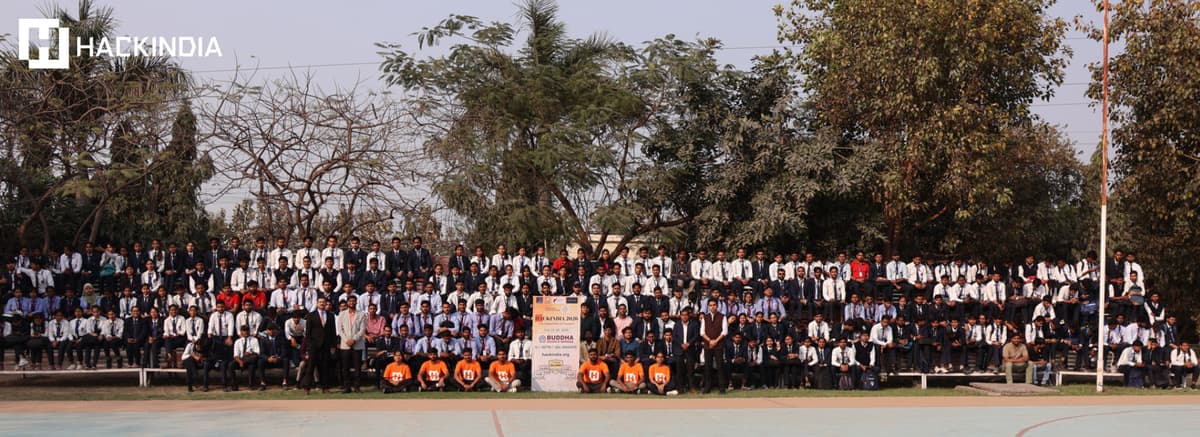
With 163 teams and more than 500 students on campus, the energy was visible from the very first moment.
A Packed Start
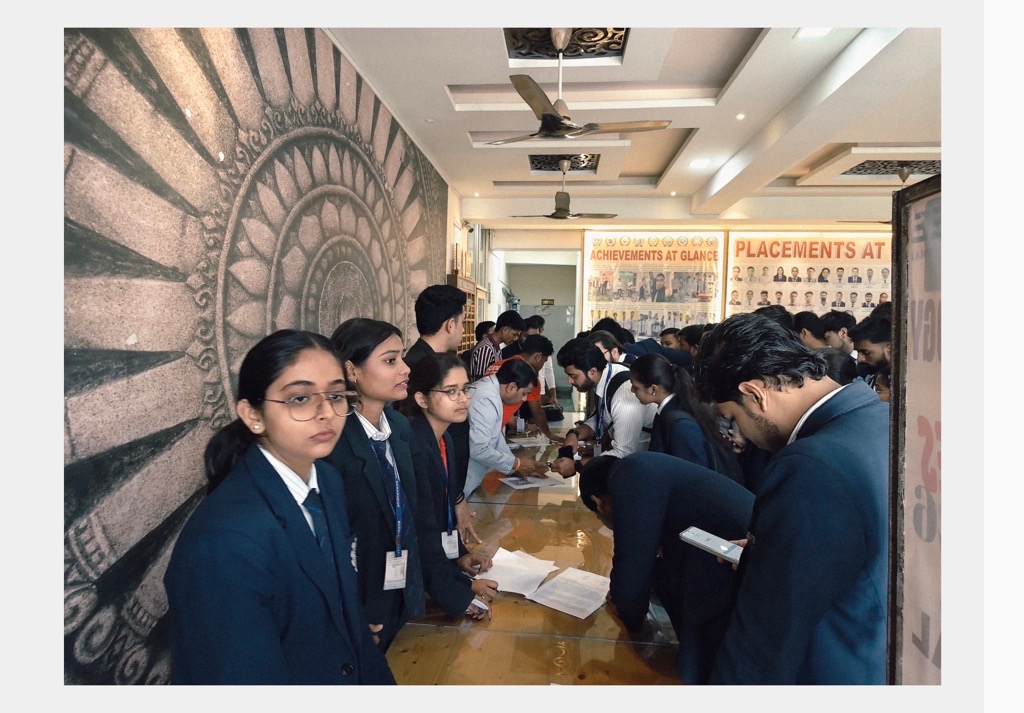
The day began with a buzzing registration desk fully packed with students eager to begin their hackathon journey. Teams arrived early, laptops in hand, ideas in mind, and ambition written all over their faces.
Soon after registration, students moved into the large seminar hall where the opening ceremony commenced with the traditional lamp lighting. The HackIndia team was formally felicitated, followed by addresses from the college dignitaries who welcomed the participants and encouraged them to push boundaries, think boldly, and build fearlessly.
The Keynote That Set the Tone
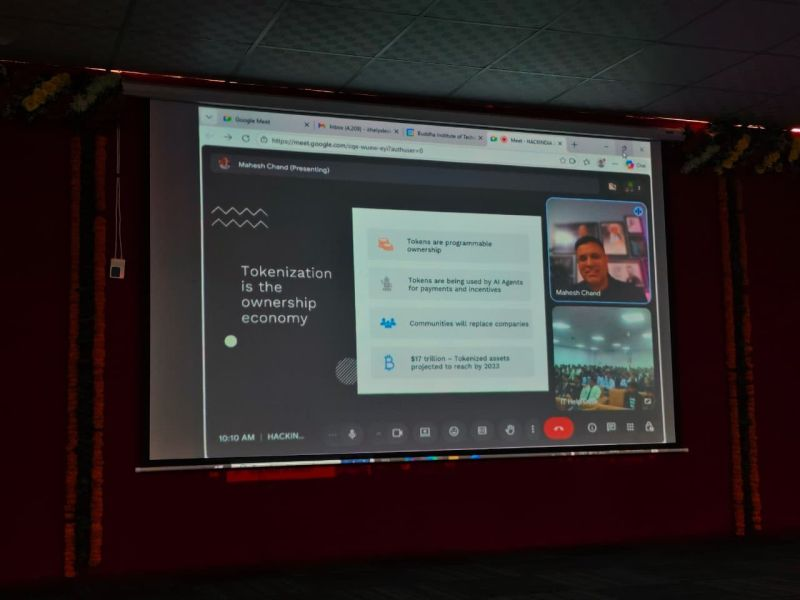
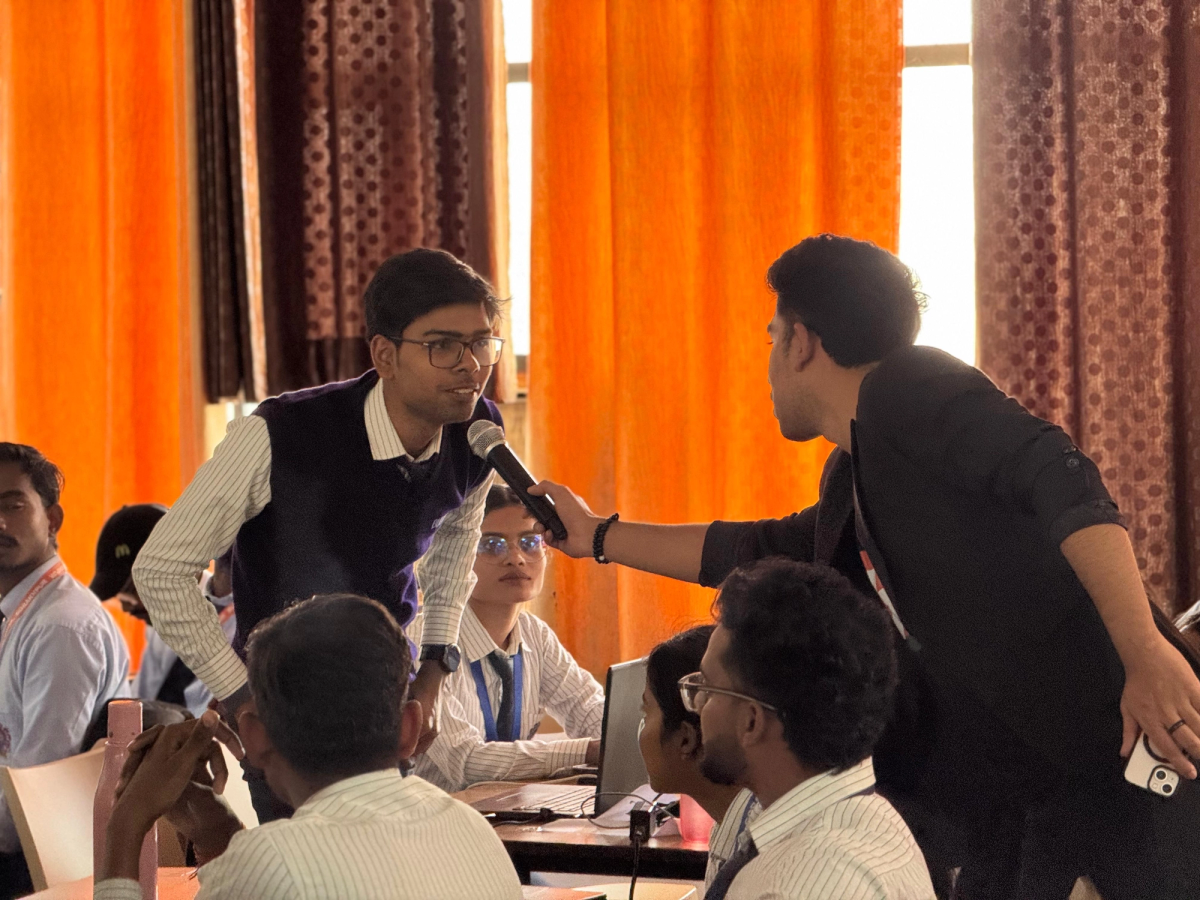
The much awaited keynote session by Mr. Mahesh Chand, Founder of CSharp Inc., was a defining moment of the day. His session was insightful, practical, and deeply inspiring. Students listened attentively, took notes, and engaged actively. The Q and A session that followed was intense. Questions flowed in rapidly, covering technology, entrepreneurship, community building, and future opportunities. The room was alive.
A Message to the Builders
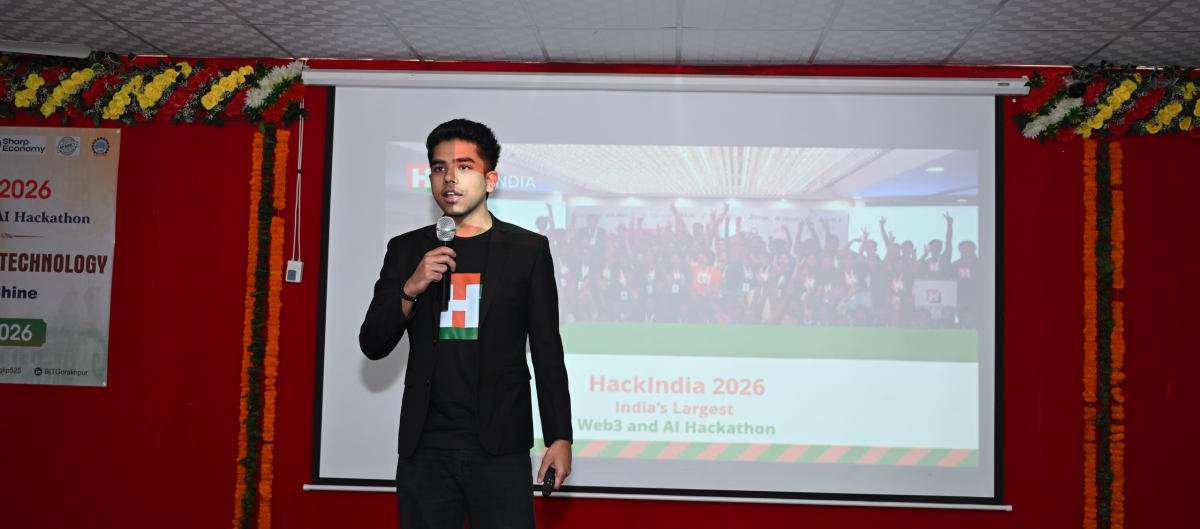
Director Avneesh Aryan then took the stage and delivered a heartfelt talk directly to Gen Z builders. He spoke about ownership, discipline, consistency, and building real products instead of chasing hype. He also gave students a deeper understanding of HackIndia as a national innovation movement and what it means to be part of something larger than a single event.
This was followed by Mr. Atul Gupta, who introduced CSharpCorner and its 3 million plus developer ecosystem, explaining how students can leverage global communities to grow faster.
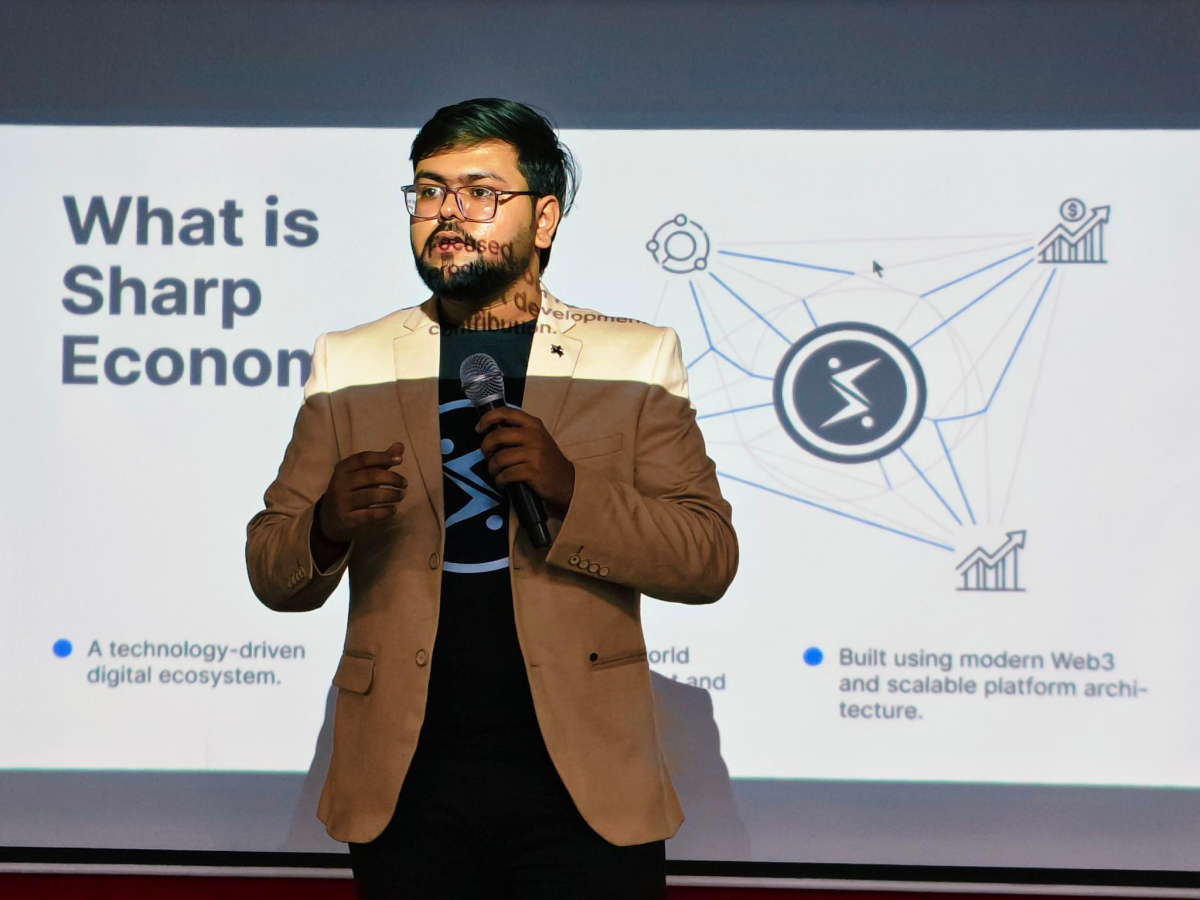
Mr. Gautam Singh then spoke about the Sharp Economy and the sponsor ecosystem powering the movement, giving students clarity about the larger platform supporting their innovation journey.
The Build Begins
Once the formal sessions concluded, students moved back into the seminar hall and the real action began.
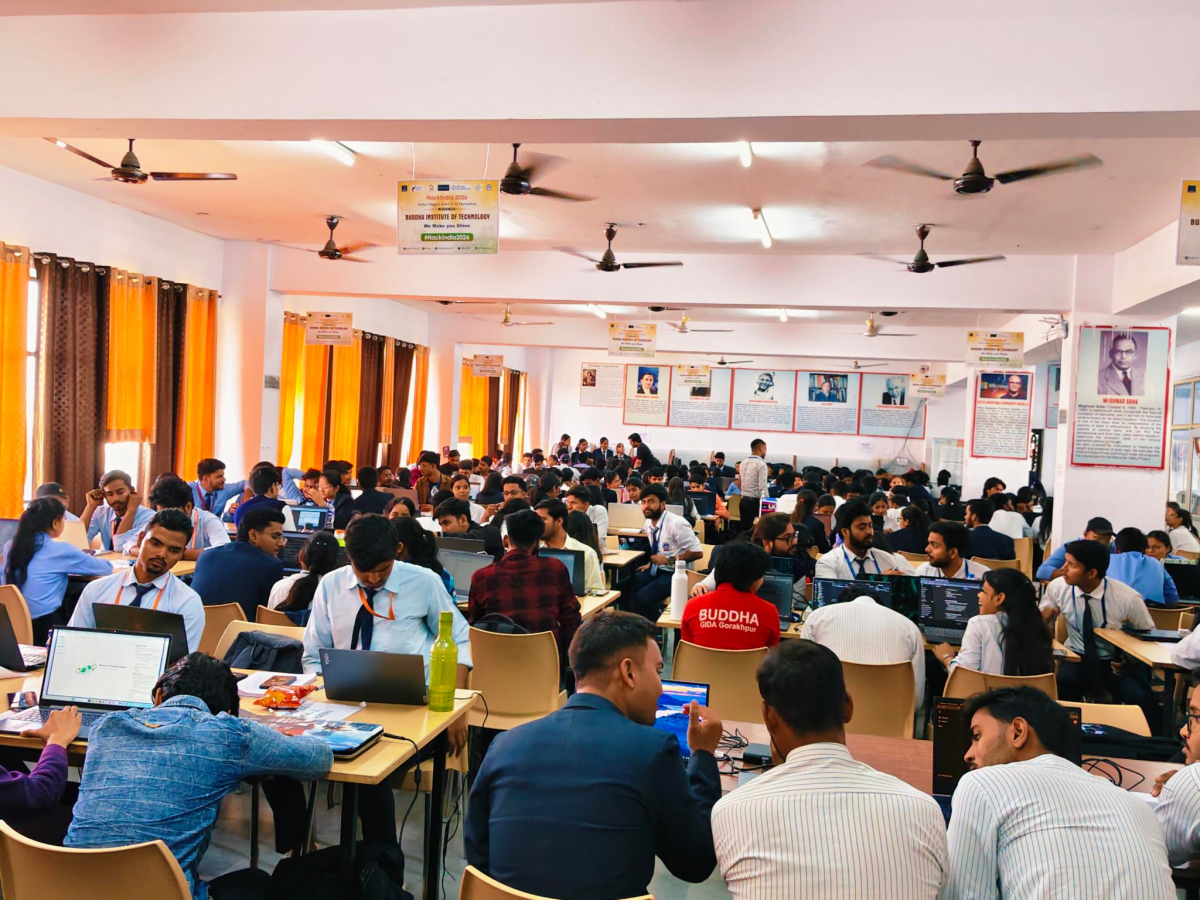
Laptops opened. Whiteboards filled up. Teams started breaking down problem statements into execution plans. Some teams were mapping system architectures. Others were dividing frontend and backend responsibilities. A few teams were already designing UI wireframes. The sound of keyboards clicking filled the room.
The first mentor round was intense. The HackIndia team and mentors went table to table, listening carefully to ideas, asking critical questions, and helping teams refine their approach. Many teams pivoted after feedback. Some simplified overly complex solutions. Others strengthened their technical architecture. Doubts were clarified. Scope was refined. Execution paths became clearer.
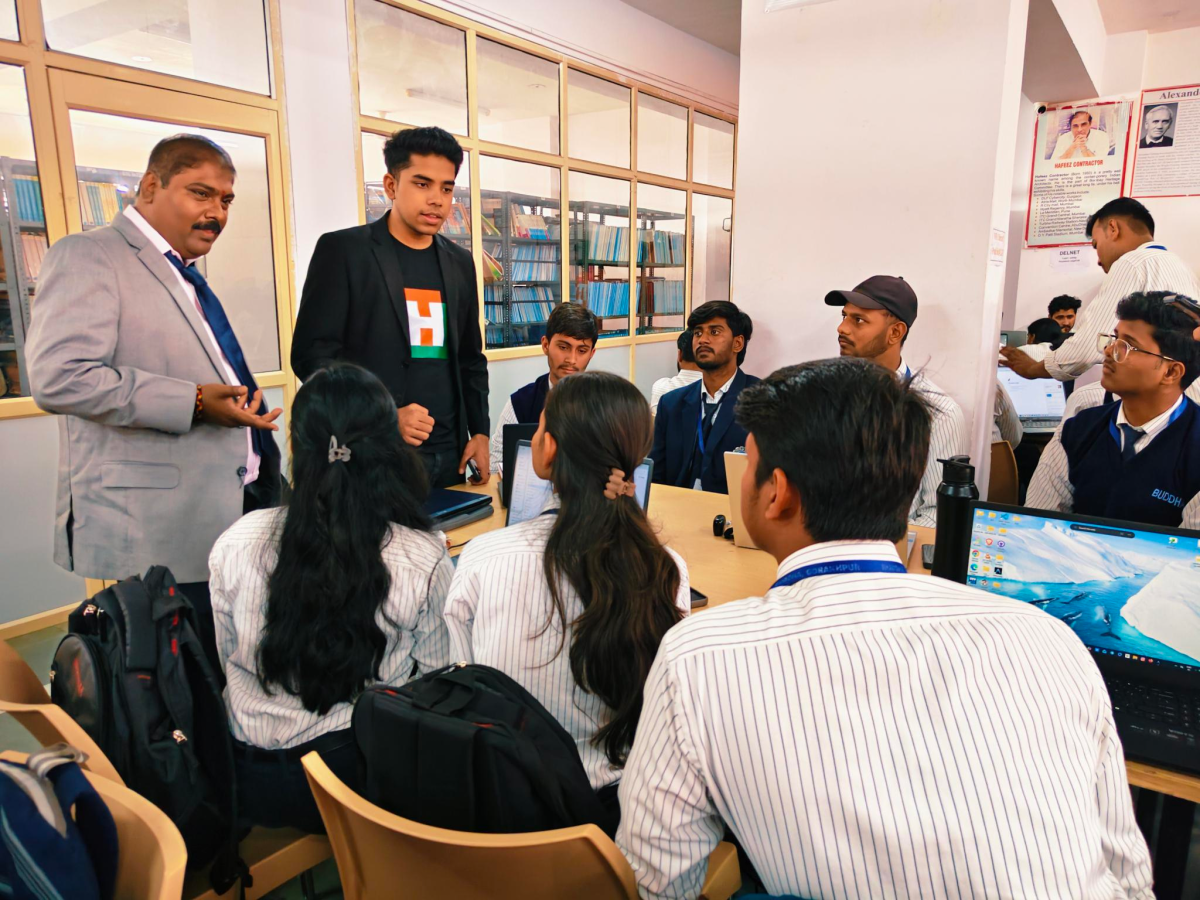
You could see the shift from excitement to focused building mode.
Recharge and Reignite
After a high intensity build session, everyone proceeded toward lunch where discussions continued over food. Ideas were debated. Strategies were adjusted.
Post lunch, Avneesh brought the room back to life with a fun interactive activity that completely shifted the energy. The entire hall lit up with laughter and participation. The mood relaxed, stress reduced, and the energy reset for the next sprint.
Back to Building
With renewed momentum, teams dived back into development. Some were already testing APIs. Others were setting up databases. A few teams were exploring AI integrations. The focus was visible. The competition was real.
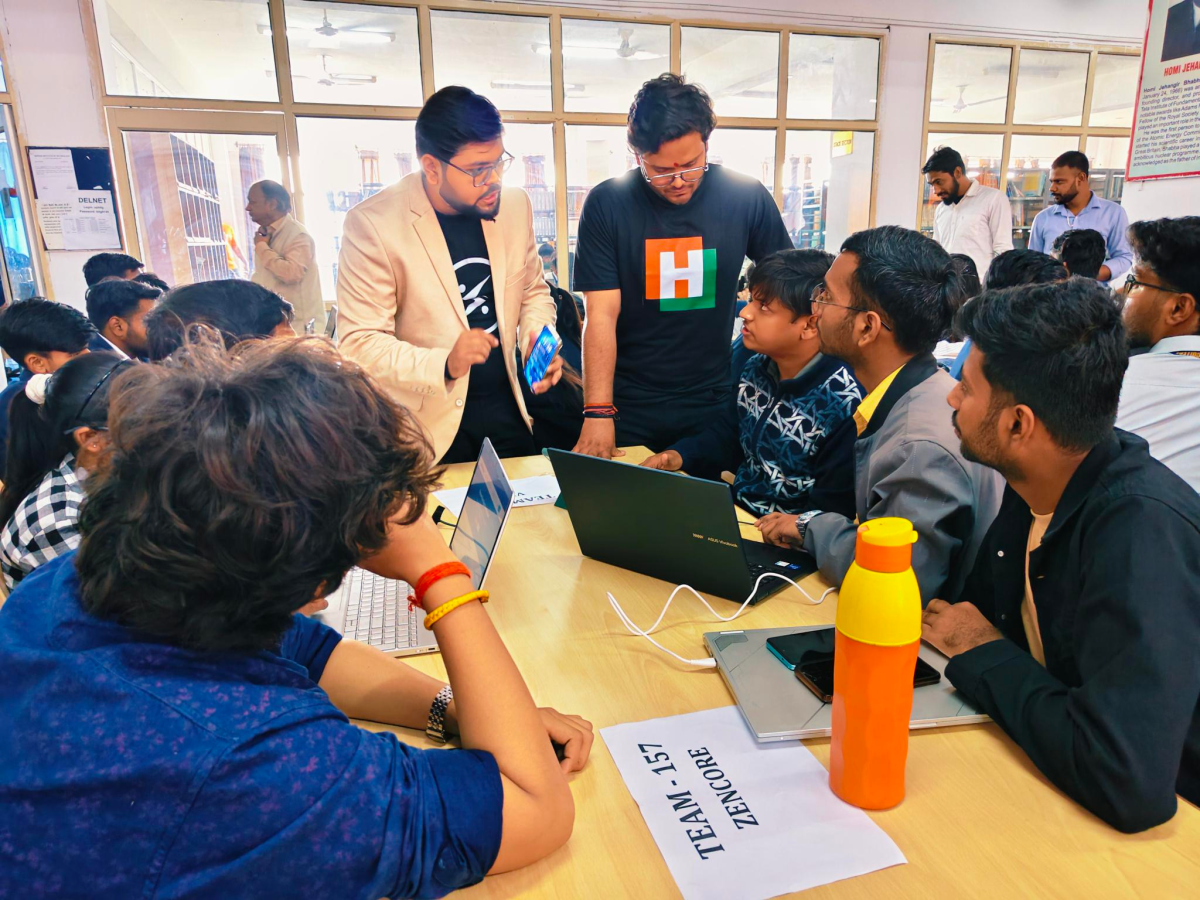
At 5 PM, teams wrapped up for the day with clear goals set for tomorrow morning. The hall slowly emptied, but the excitement did not.
They return tomorrow at 9 AM sharper, more focused, and ready to push further. Spark 1 at BIT Gorakhpur has officially begun and the standard has been set high.
Day 2 of HackIndia Spark 1 at Buddha Institute of Technology was where ideas met evaluation and ambition met execution.
The morning began inside the Buddha Innovation Cell wing of BIT Gorakhpur, where the much awaited Evolution Round 1 took place.
Evolution Round 1
The energy was intense from the very beginning.
Teams walked in carrying prototypes, laptops, and sleepless determination. The turnout was massive. The innovation cell was filled with founders in the making, developers ready to defend their architecture, and teams eager to prove that their idea deserved to move forward.
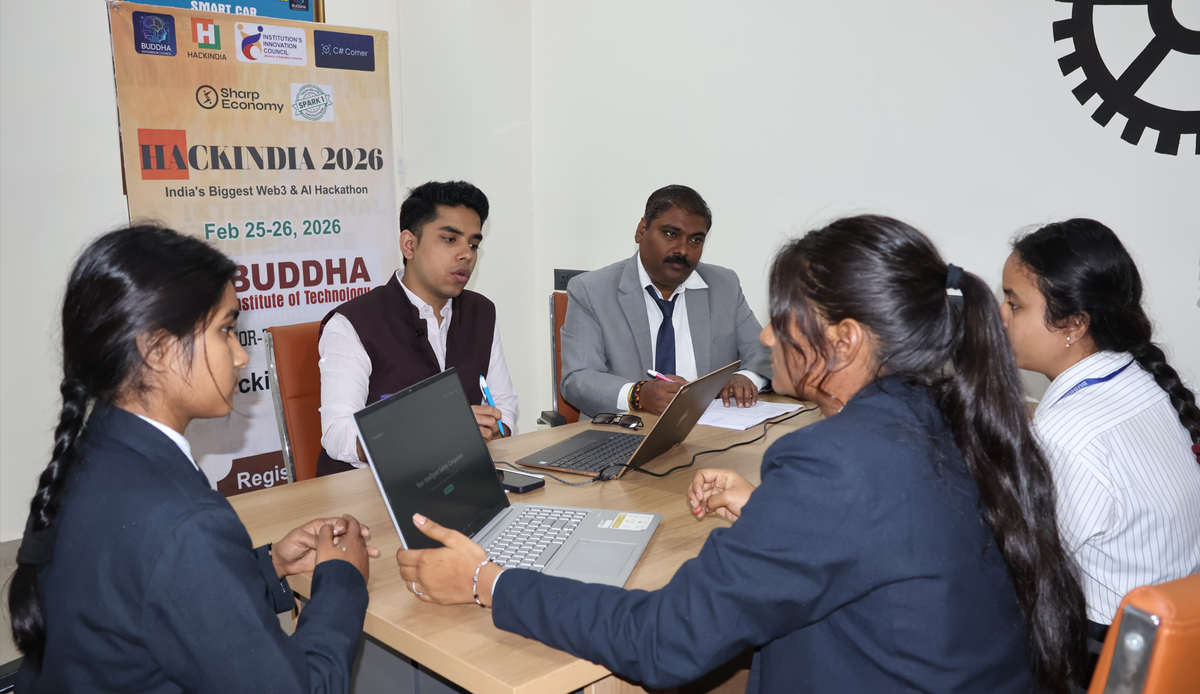
Each team presented their concept to a panel of judges who evaluated them on problem relevance, technical feasibility, scalability, execution clarity, and real world impact.
Some of the standout ideas included:
HydroGuard, a smart agricultural monitoring system that tracks water levels in irrigation fields in real time and alerts farmers before critical shortages occur. The team demonstrated sensor integration logic and a dashboard interface that visualized predictive data trends.
An AI powered crop advisory tool that used historical climate data and soil inputs to suggest optimized planting cycles.
A decentralized academic credential verification platform built on Web3 principles to eliminate forged certificates.
A smart waste management tracker designed for urban campuses with automated bin level detection and optimized collection routes.
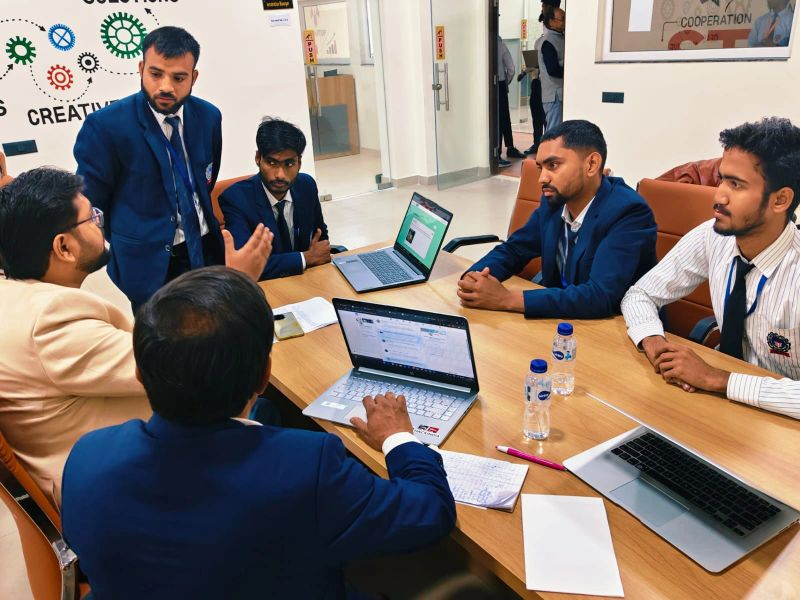
Students were not just presenting slides. They were presenting logic diagrams, deployment strategies, system flows, and in some cases, early working builds. The judges asked tough questions. Teams defended their architecture. The room felt like a real startup demo day.
The Top 20 Selection
From an overwhelming pool of 92 teams and more than 500 participants, only 20 teams were selected to move forward.
When the names were announced, the room erupted. The selection itself reflected the depth of competition. With such a high volume of quality ideas, the margin between teams was razor thin.
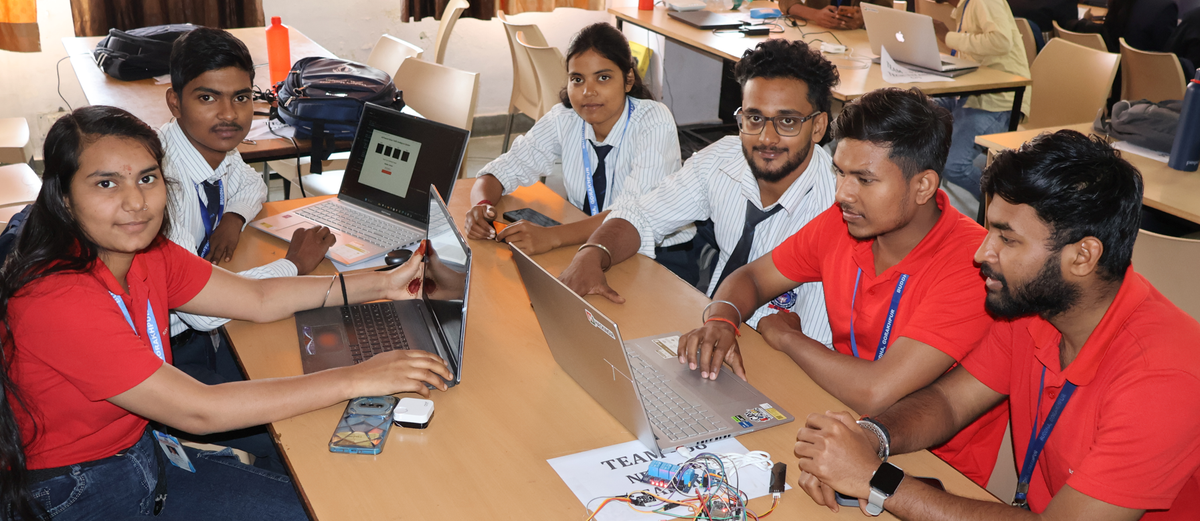
Making it into the Top 20 was an achievement in itself.
Final Demo and Pitch Round
The final round was where pressure peaked.
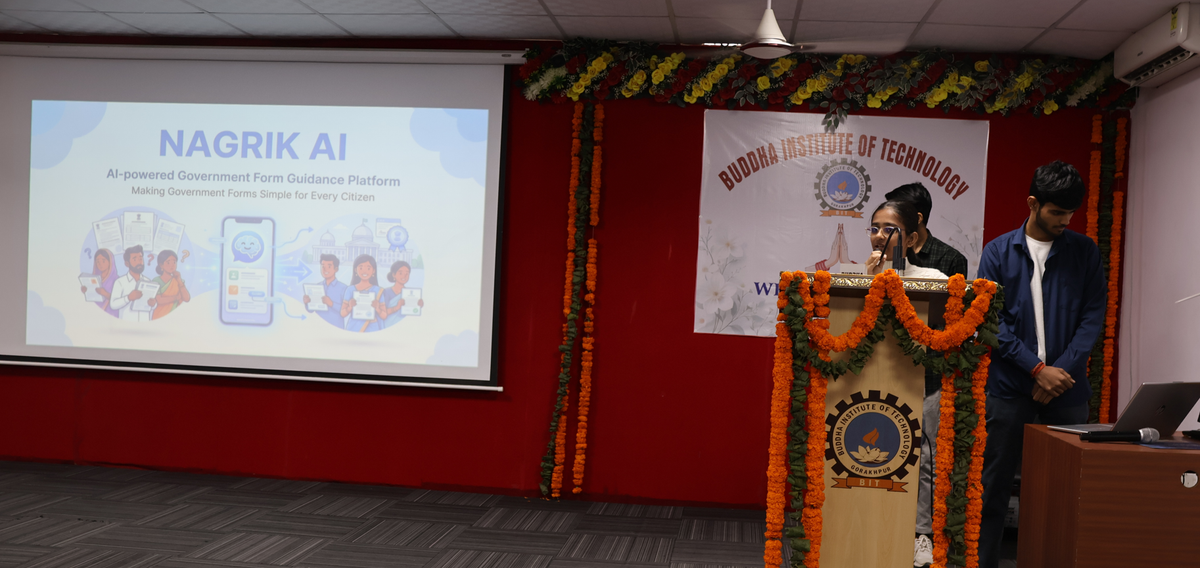
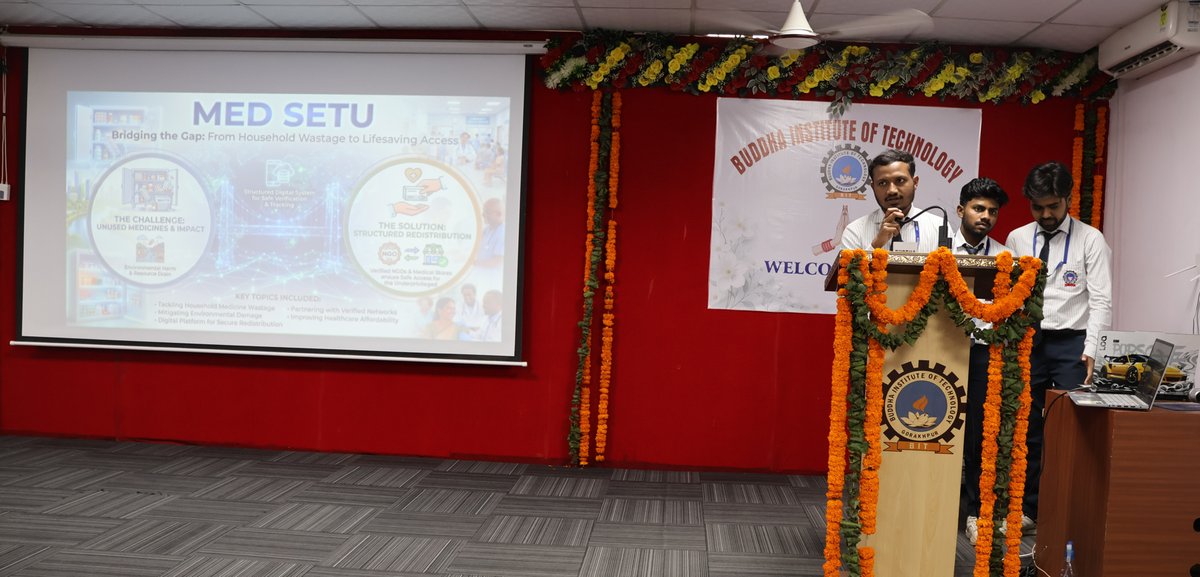
The Top 20 teams presented live demos and structured pitches to the final decision panel. This was no longer just about the idea. It was about execution.
Teams showcased working prototypes, live dashboards, backend integrations, and technical architecture breakdowns. Some demonstrated API calls in real time. Others walked through system logic and scalability planning.
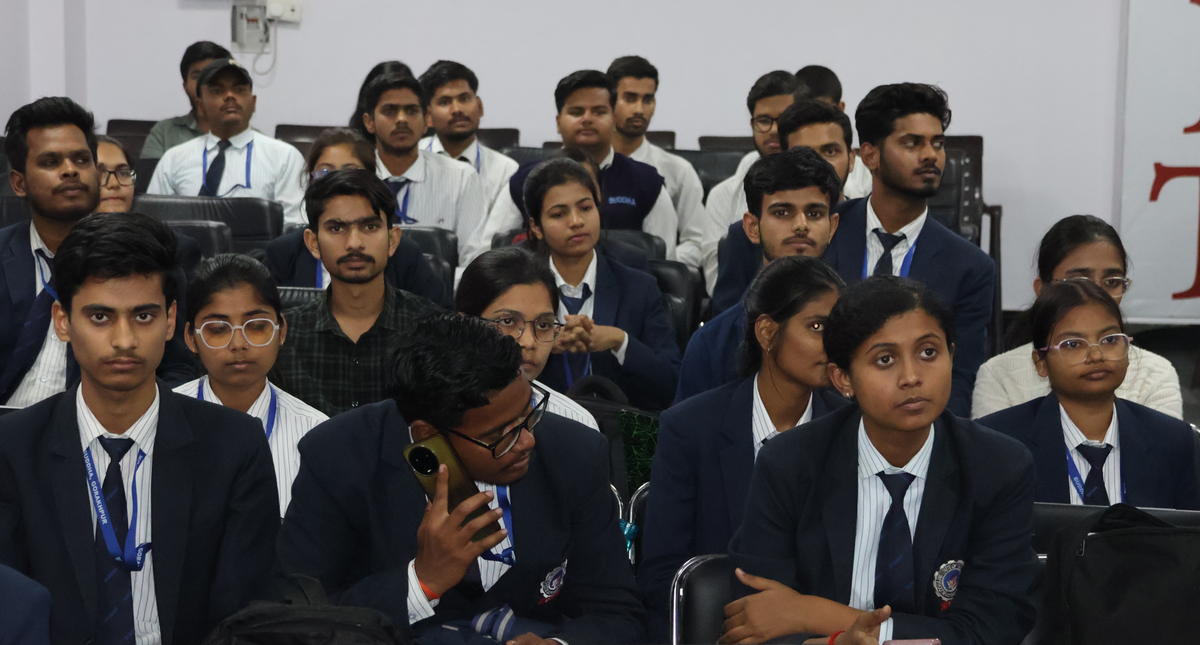
Judges evaluated innovation, clarity, presentation strength, business potential, and technical robustness.
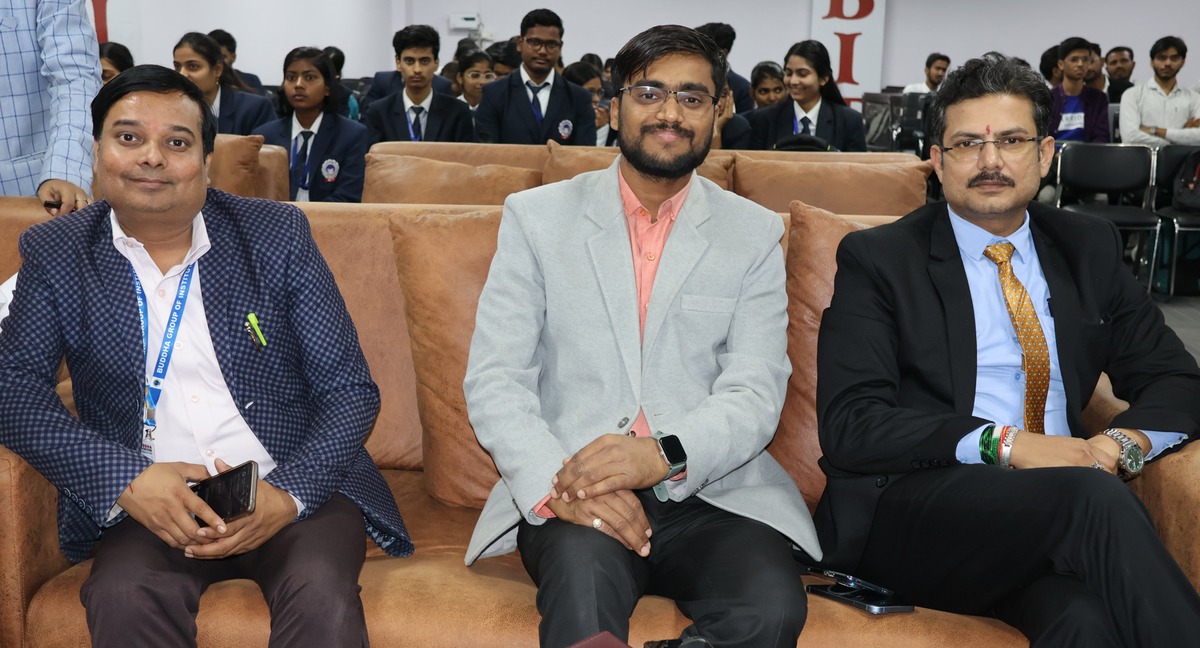
The competition was fierce. Every pitch felt like it could win.
Winners Announced
After intense deliberation, the winners were officially announced.
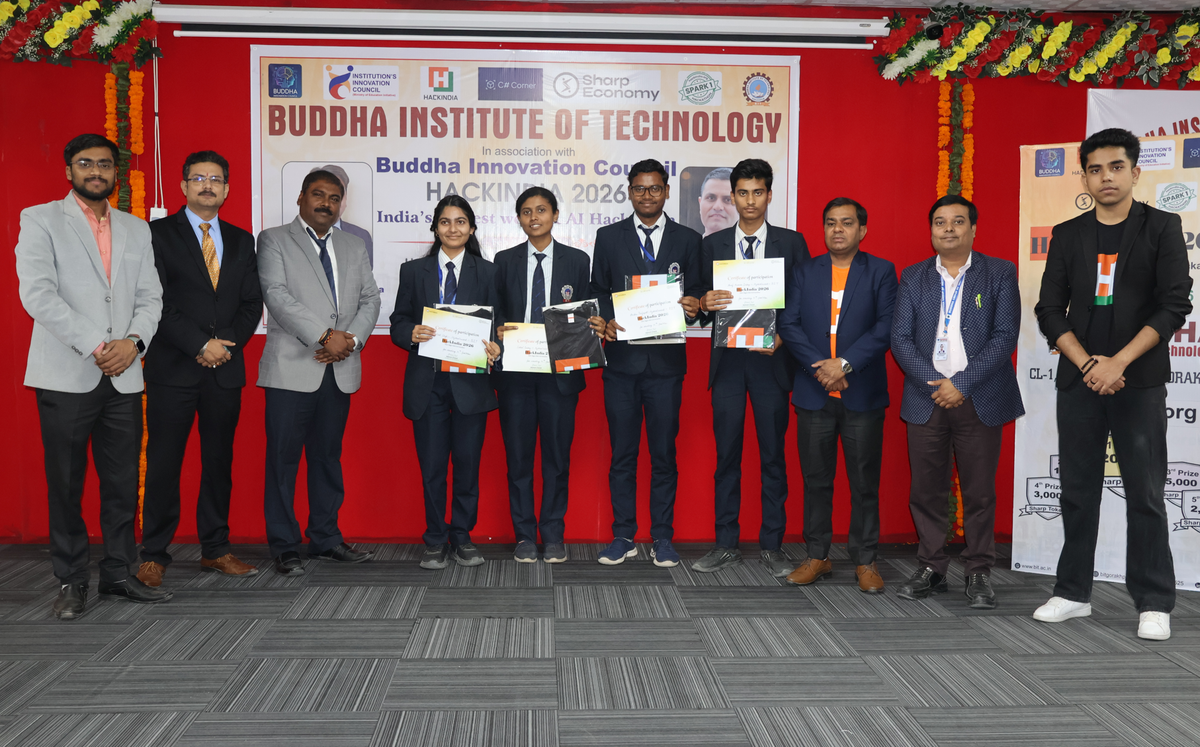
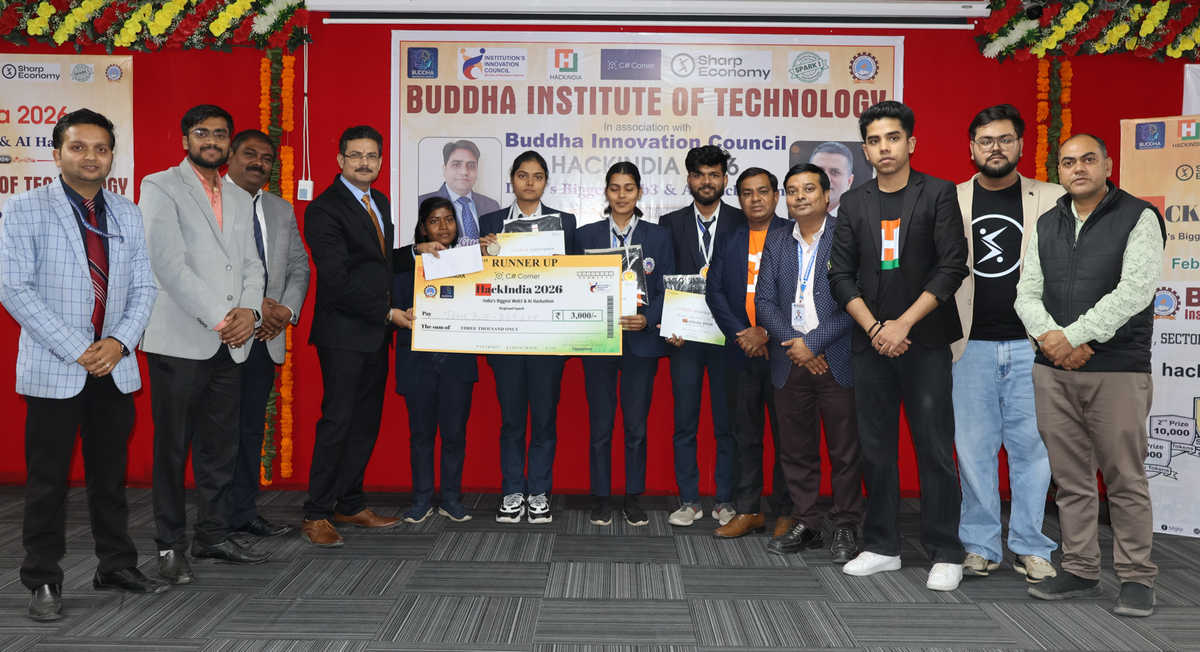
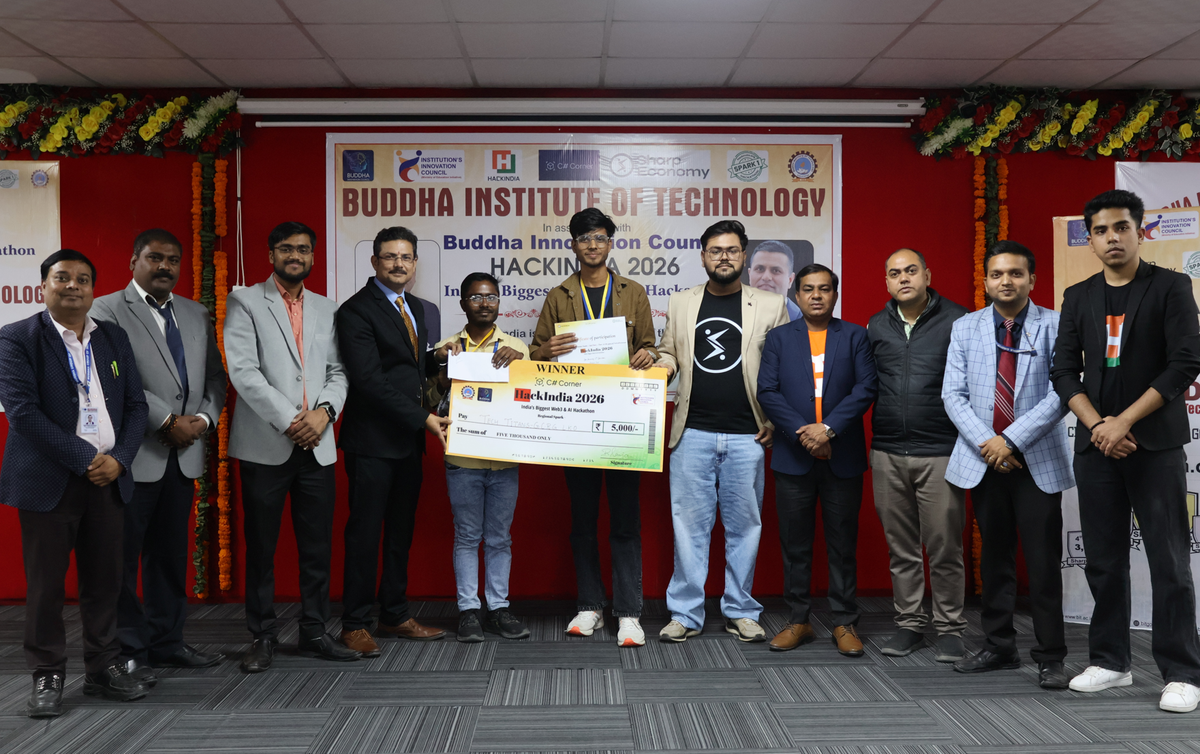
First Place
Tech Titans from GCRG Group of Institutions, LucknowFirst Runner Up
Team Blue from BIT GorakhpurSecond Runner Up
Zencore from MMM University of Technology, GorakhpurFourth Place
HydroGuard from BITFifth Place
Tech Miners from KIPM College of Engineering and Technology
The winning teams were awarded cash prizes, Sharp Tokens, and exclusive HackIndia goodies in front of a cheering audience.
Powered by Sharp Economy
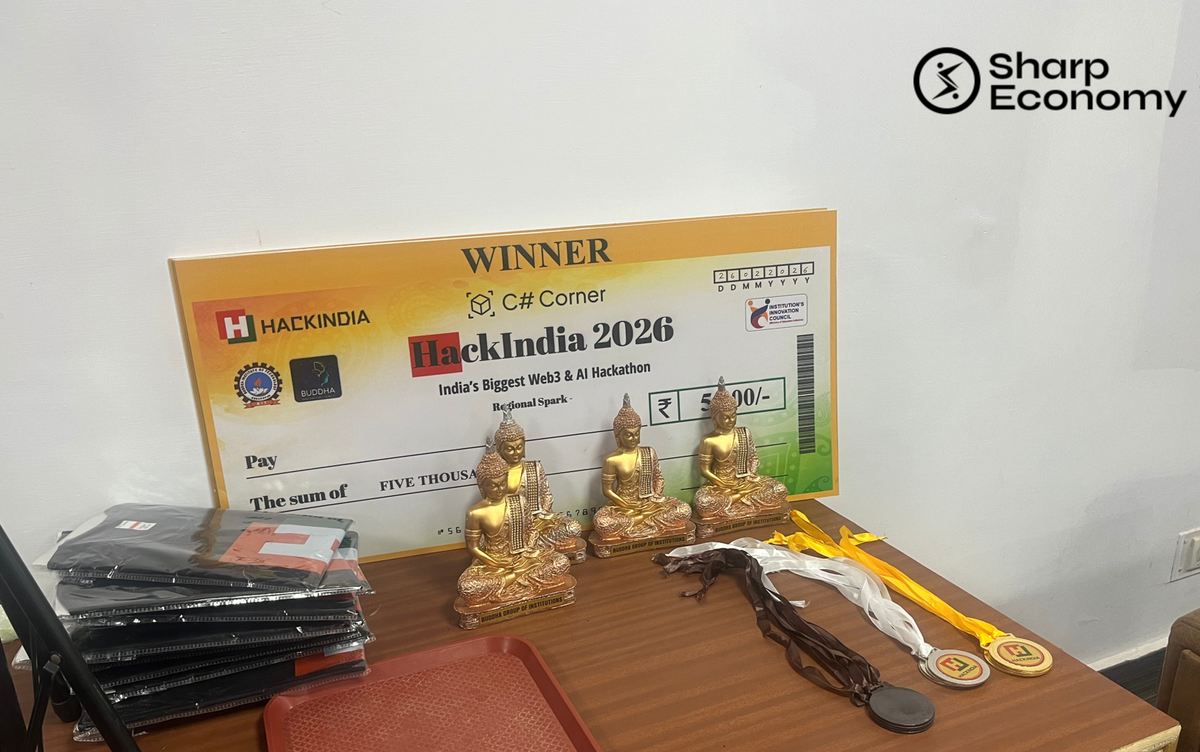
HackIndia Spark 1 was proudly supported by Sharp Economy, whose backing enabled this large scale innovation platform to come alive at BIT Gorakhpur. From empowering student builders with Sharp Tokens to supporting rewards, ecosystem exposure, and structured execution, Sharp Economy played a critical role in elevating the overall experience. Their commitment to nurturing grassroots innovation and rewarding real builders reflects the larger vision behind HackIndia. Partnerships like these make national scale student innovation possible.
A National Level Success
Spark 1 at BIT Gorakhpur concluded as a massive success. From 500 plus students to 161 competitive teams and a final Top 20 showdown, the scale and quality reflected the national ambition of HackIndia.
This was not just a campus event. It was innovation at scale.
Spark 1 has set the benchmark. And this is only the beginning.